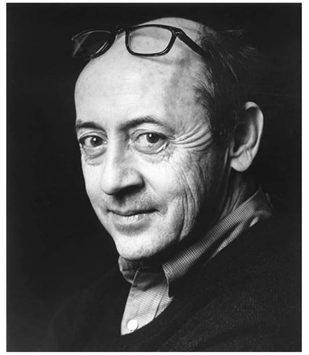
Billy Collins
My favorite poem by Billy Collins is Nostalgia because it is so fun to read. I like how Collins makes it sound like I am standing there reminiscing with him about days gone by, like when he says “Remember the 1340’s? / You always wore brown, the craze color of the decade” (lines 1-2). There isn’t too much rhyme and rhythm, so it sounds like someone talking to me rather than me reading a poem. I also like how he just picked out random points in history and talks about them like they were yesterday – “Where has the summer of 1572 gone?” (line 8). Somehow it makes history come alive and feel more personal. His descriptions in the poem are super vivid, and I thought it was neat how he turned his thoughts towards the future at the end, making the reader feel expectant about what is to come, saying, “we can only guess” (line 38). Find the poem here: https://www.poetryfoundation.org/poems/46703/nostalgia-56d226ac3a1dd
Billy Collins reads his poems to people! Here is a video of him reading four of his poems. His sense of humor is evident even in this short video:
America’s Most Popular Poet
Billy Collins, who was born in 1941, has been called by some “the most popular poet in America” (Poetry Foundation, 2020). He served as the US poet laureate for two terms in the early 2000’s and was also the New York State poet laureate for two years. According to poetry foundation, “he has received fellowships from the National Endowment for the Arts, the Guggenheim Foundation, and the New York Foundation for the Arts” (Poetry Foundation, 2020). He also was awarded the Mark Twain Prize for Humor in Poetry (Poets.org, 2020). His poems have won the hearts of Americans and he continues to write in his humorous, yet often thoughtful and tender way.
Born in New York, New York, Collins wrote his first poem when he was 12 years old (Cunningham, 2013). His father was from an Irish family in Massachusetts and his mother was from Canada. Collins attributes his love for literature to his mother, who read to him constantly when he was young. He says that “being read to as a child is one of the great experiences in life” (Plimpton, 2001), and suggests that being read to by his mother was one of the most important things that he experienced (Plimpton, 2001). Collins grew up to receive his B.A. from the College of the Holy Cross, and then a doctorate in Romantic poetry from the University of California, Riverside (Cunningham, 2013).
Collins definitely has a process for writing his poems. He says he doesn’t hold himself to any requirements or deadlines, and that for him “poem writing is a very sporadic activity” (Plimpton, 2001). He does a lot of waiting and relies on his intuition about if he should continue a line he started or not. Once he starts, Collins says he usually writes a poem in 20 to 40 minutes, and goes back to “tinker with a word or two” (Plimpton, 2001). However, he does not like huge revisions and says that if it doesn’t come out right the first time, he throws the whole thing away. He wants the whole poem to come out at once so that it flows nicely (Plimpton, 2001). He also says that he keeps his readers in mind as he writes. He wants to make sure he isn’t making his poem too confusing and that he isn’t going too fast for them (Poetry Foundation, 2020). Collins’ skill and consideration for his readers is evident in his poems.
Sitting down to read one of Billy Collins’ poems isn’t like reading anyone else’s work. Collins has a clarity and a flow that makes his poems some of the most enjoyable to read. He has a way of bringing his readers with him and helping them see what he is saying. He skillfully weaves the poetry devices into his works, letting them add their depth but refusing to get caught up on them. His way of writing has definitely earned him the reputation of America’s most popular poet.
References
Billy Collins. (2020). Retrieved February 12, 2020 from https://www.poetryfoundation.org/poets/billy-collins
Billy Collins. (2020). Retrieved February 12, 2020 from https://poets.org/poet/billy-collins
Cunningham, John M. (2013). Billy Collins American Poet. Retrieved February 12, 2020 from https://www.britannica.com/biography/Billy-Collins
Plimpton, George. (2001). Billy Collins, The Art of Poetry No. 83. Retrieved February 12, 2020 from https://theparisreview.org/interviews/482/billy-collins-the-art-of-poetry-no-83-billy-collins
Device Examples
Alliteration and Personification
Collins uses alliteration a few times in his poem “Osso Buco”. A couple of my favorite examples are his wife’s “faraway friend” (line 25), and his “companionable cup of tea” (line 27).
In my opinion, alliteration is hard to use and hard to pick out. However, in “Osso Buco” I felt like these two examples of alliteration were used seamlessly and they really add something to the poem – more than just an extra word. Collins chose words with the same beginning letters, but he didn’t go out of his way to add alliteration to the poem. The fact that his wife is talking to her friend on the phone is nice but adding that the friend is far away somehow makes things seem grander. Collins is talking about comfort in this poem, and being able to reach those you love, no matter the distance that separates you, is just another luxury he throws in. In my opinion, the alliteration here is an added bonus to what he has to say, and while it adds more to the poem it sounds effortless. The second example with the “companionable cup of tea” (Collins 27) seems like the alliteration was a little more “on purpose”, but it still adds to the comfort of the poem and doesn’t sound like an effort or make the poem sound too repetitive.
Collins uses personification all over in his poem “Building with Its Face Blown Off”. Even the title is slightly a form of personification, although buildings do have faces. My favorite example in this poem was “the bathroom look[ing] almost embarrassed” (Collins 13).
Personification is probably my favorite poetry device. It adds so much to what the writer is saying! Making the war-torn buildings sound like a disrespected person adds so much to the point that Collins is trying to make – that war hurts more than just the people fighting in it. It hurts everything around it – the civilians, the landscape, and, yes, the buildings and homes. The reader feels compassion for the house that was so abruptly destroyed, but also for the family who owned the house, because the feelings of the house in the poem are probably exactly the feelings of the family who owned it – embarrassment at being caught off guard, their lives suddenly shattered and emptied, humiliated that all who pass by can see into their private spaces and sort through their belongings.
My Thoughts after Researching Collins
Personally, I find it very hard to appreciate poetry because it seems so empty. I feel like I am trying to read something that is put together in a confusing way and trying to decipher what the poet is trying to get at. It rarely makes sense or is enjoyable for me. If I am reading a book and there is a poem written in the story, I usually just skip right over it and get to the next paragraph. However, studying Billy Collins gave me a slightly different perspective on poetry, at least the poems written by Billy Collins. As I was researching him, I realized that his goal when writing poems was to write a good poem that was enjoyable for others to read. In the Perspective essay, Collins said, “When I am writing, I am not thinking about the poem’s meaning; I am only trying to write a good poem… Thinking about what a poem means would only distract me from the real work of poetry.” All he wants to do is make a good poem that makes for good reading, and I think he does a good job of it. For once I actually enjoyed reading poems!
I think the way a poem flows is very important for easy reading. I mentioned when I talked about the way Collins incorporated alliteration that it didn’t sound like he really had to try to get it in there. It just happened to be two words that started the same and it became an added bonus to the poem. I think poets can get hung up on rhyming, a certain rhythm, or adding in poetry devices and then it sounds like they tried too hard. Billy Collins smoothly incorporates all these things into his poems, and they don’t interrupt the thoughts, like happens in a lot of poems. They make them flow better. For example, reading the poem “Nostalgia” feels more like I am having a conversation with a friend about old times than reading a poem about history. Part of it may be the questions (“Where has the summer of 1572 gone?” (line 8)), but I think a lot of it is the free flow.
I find that I appreciate the fact that Collins wants to break away from poetry “norms”. For example, in Osso Buco, Collins talks about the joys and comforts of life, but he says himself in his thoughts on the poem that it is not a typical mood of poetry, but he talks about it anyway. He hits on the rougher side of life, for example when he mentions “people of all nations stare[ing]/at one another across a long empty table” (lines 33-34), but for the most part he keeps the poem positive. He followed Shakespeare’s example in poking fun at the “norm” for love poems as well, writing “Litany” in mockery of a love poem he read in a magazine. Like Shakespeare, he points out all the ways love poems exaggerate and pokes fun at it. He even brags about himself in the poem (lines 19-26)! This freedom also helps me appreciate Collins’ work more.
 Billy Collins: America's Most Popular Poet